
Parents hear a surprising number of terms before their child ever walks into a classroom. Daycare, preschool, Pre-K, VPK, early learning, kindergarten readiness. They can sound interchangeable until it is time to actually choose a program.
One of the most common questions is what age does pre k start?
For most children, Pre-K begins around age 4 and takes place during the year before kindergarten. Preschool, however, can begin earlier. Many children enter a preschool classroom around age 3, where the day starts introducing more structured learning alongside play, social development, language, and everyday routines.
Florida families have another term to know: VPK, or Voluntary Prekindergarten. Florida’s state-funded VPK program is designed primarily for 4-year-olds preparing for kindergarten. A child generally qualifies when they live in Florida and are 4 years old on or before September 1 of the applicable school year.
That gives parents a straightforward age answer, but age alone does not tell the whole story. A child’s experience before kindergarten changes considerably between ages 3, 4, and 5, and understanding those differences can make choosing the right classroom much easier.
Preschool and Pre-K Are Not Quite the Same Thing
People often use “preschool” and “Pre-K” to describe the same general stage of childhood. In everyday conversation, that is understandable. In an early learning program, though, they can represent different points in a child’s development.
Preschool commonly includes children around age 3. The classroom begins to feel more organized than toddler care, but young children are still learning through movement, conversation, imagination, repetition, and play.
At this stage, learning may include recognizing letters and numbers, listening during a story, following simple classroom routines, participating in group activities, practicing fine motor skills, and figuring out how to cooperate with other children.
The American Academy of Pediatrics notes that children around age 3 are becoming increasingly interested in interacting with other children and can benefit from school or organized group environments that help develop those social skills.
Pre-K moves closer to kindergarten preparation.
Most Pre-K students are around 4 years old. They are still very much young children who need play, movement, creativity, encouragement, and time to explore, but classroom expectations gradually become more advanced.
They may spend more time developing early literacy, listening skills, number concepts, independence, problem-solving, and the ability to participate in a group learning environment.
That difference is why answering what age does pre k start usually means looking at both a child’s birthday and the type of program a parent is considering.
What Age Does Pre K Start in Florida?
Florida gives families a much clearer definition when VPK is involved.
The Florida Department of Education states that children are eligible for the Voluntary Prekindergarten Education Program when they live in Florida and are 4 years old on or before September 1 of the current school year. Florida’s VPK program is free for eligible children and is specifically intended to help prepare them for kindergarten.
There is also an important option for some younger 4-year-olds. Florida allows parents of children whose fourth birthday falls between February 2 and September 1 to postpone VPK and enroll during the following program year when the child is 5.
That flexibility can matter for families whose child technically qualifies by age but may benefit from another year before moving into kindergarten.
For families in West Melbourne, Palm Bay, Melbourne, and elsewhere in Brevard County, the Early Learning Coalition of Brevard County is also an important local resource for VPK registration and early learning information.
The state rules determine eligibility. The next question for parents is what that year should actually accomplish.
What Happens During Pre-K?
A good Pre-K classroom is not simply kindergarten pushed down by one year.
Four-year-olds are still learning how to navigate the world around them. A strong program builds academic foundations without treating young children as if they should already be elementary school students.
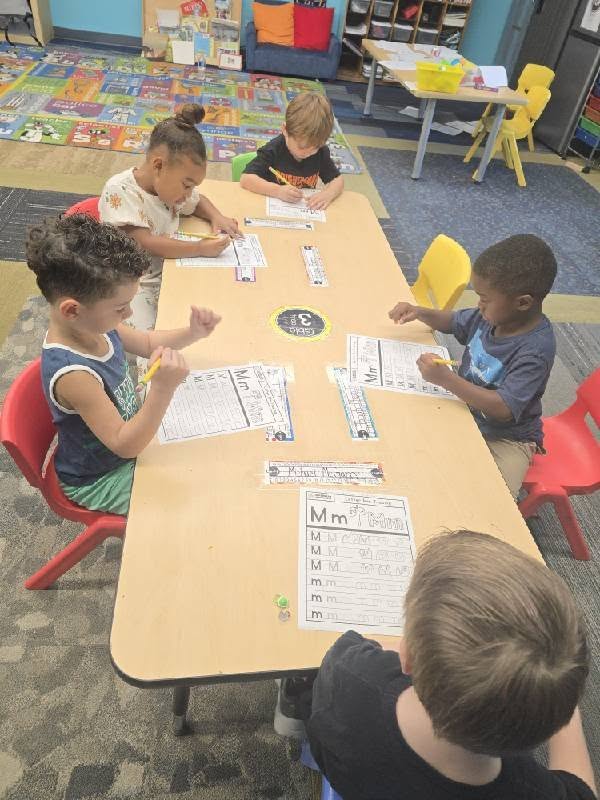
Children may work with letters, sounds, books, early writing, counting, shapes, patterns, storytelling, science activities, art, music, and hands-on projects. Just as important, they are learning how to listen, ask questions, follow routines, communicate frustrations, make friends, wait for a turn, and solve small problems with increasing independence.
Florida’s early learning standards emphasize areas such as language, vocabulary, listening comprehension, print awareness, emergent reading, and emergent writing during the years leading into kindergarten.
Some of the biggest Pre-K gains may be less obvious than learning a letter or counting to 20.
A child who once needed an adult to solve every disagreement may begin talking through a problem with a classmate. A child who struggled to sit through a story may become absorbed in one. Another may begin walking into class, hanging up a backpack, and joining an activity without needing the same level of help each morning.
Those are meaningful forms of kindergarten preparation too.
Does a Child Need to Know How to Read Before Pre-K?
No.
Pre-K is where many of the foundations for later reading become stronger. A child does not need to arrive already reading independently.
At age 4, children are developing at noticeably different speeds. One child might recognize nearly every letter. Another may know only a handful but have an impressive vocabulary and love telling stories. Another may understand numbers well but still be learning how to hold a pencil comfortably.
That variation is normal.
The American Academy of Pediatrics emphasizes that children develop school-readiness skills at different rates. Readiness includes much more than academics. Communication, listening, emotional regulation, cooperation, attention, motor development, and the ability to participate with other children all contribute to the transition into school.
The point of Pre-K is not to prove that a 4-year-old already knows everything needed for kindergarten. It is to give that child an environment where those skills can grow.
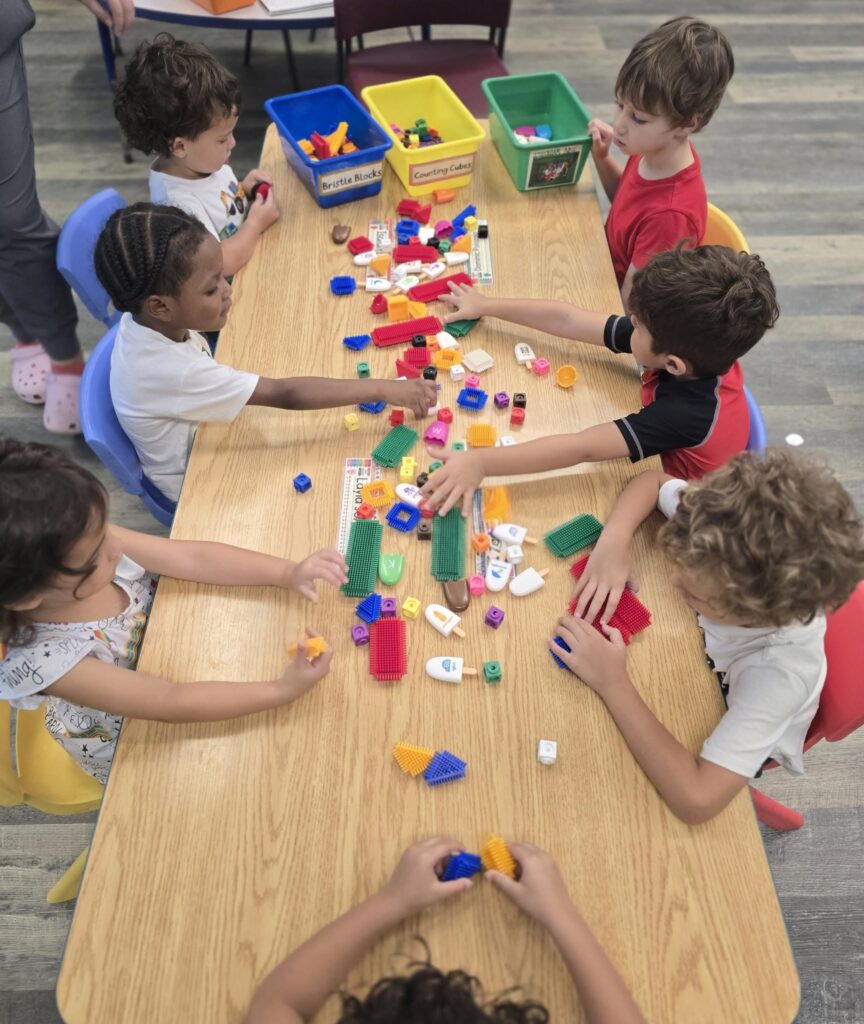
What About Children Who Start Preschool at Age 3?
Three can be an excellent age to begin a preschool program.
For many children, the year between 3 and 4 is when the classroom begins to make more sense. They become increasingly capable of talking through needs, following directions, participating in imaginative play, engaging with other children, and handling familiar routines.
The changes can happen quickly.
A newly enrolled 3-year-old may initially be most interested in paint, blocks, playground time, and whatever another child happens to be holding. Months later, that same child may be identifying letters in a book, remembering classroom songs, telling elaborate stories, and reminding everyone else what comes next in the daily schedule.
Preschool provides room for those abilities to emerge before the more focused kindergarten-readiness year begins.
At Mustard Seed Kidz, the age progression reflects that natural development. The preschool program serves children around age 3, while VPK serves eligible children ages 4 to 5. Families can explore the different age groups through the Mustard Seed Kidz programs page.
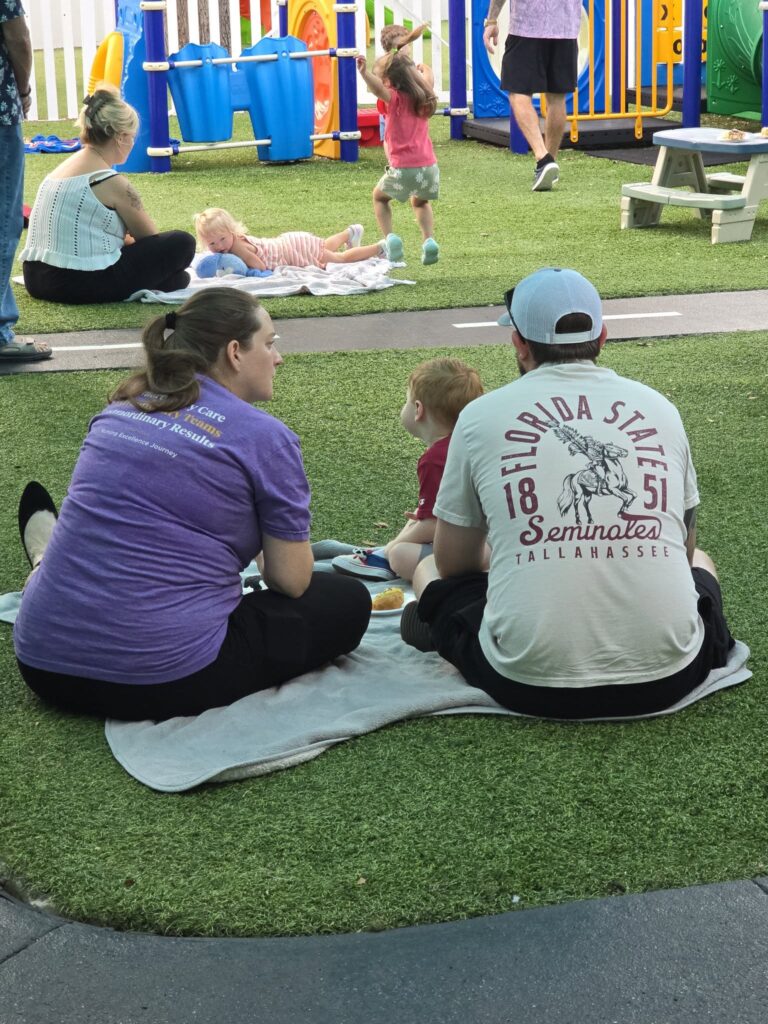
Age Matters, but So Does Readiness
Parents naturally watch birthdays because school enrollment is organized around them. Children do not develop according to a calendar quite so neatly.
One 4-year-old may walk into a classroom eager to meet everyone. Another may take several weeks before feeling comfortable speaking in a group.
Some children love structured activities but become frustrated when a project does not go exactly as planned. Others are highly independent during play but still need help transitioning from one activity to another.
That does not mean one child is “behind.”
A more useful approach is to watch how a child handles everyday experiences.
Can they communicate basic needs to an adult? Can they participate in a short group activity? Are they becoming interested in other children? Can they follow familiar directions? Are they beginning to manage simple tasks independently? Can they separate from a parent or caregiver after an appropriate adjustment period?
None of these needs to be perfect before Pre-K begins.
Teachers expect children to arrive with different personalities, experiences, strengths, and areas where they still need support.
In fact, learning how to function within a classroom is part of the reason Pre-K exists.
Social Development Is a Major Part of Pre-K
Parents often focus on letters, numbers, and writing when thinking about kindergarten readiness. Teachers tend to notice something else just as quickly: how children interact with the people around them.
At ages 4 and 5, friendships begin to become more meaningful. Children are increasingly interested in playing together instead of simply playing beside one another.
That creates plenty of opportunities for learning.
Who gets the blue marker? What happens when two children want the same toy? How do you ask to join a game? What do you do when someone changes the rules? How do you tell a teacher that something is bothering you instead of immediately crying or grabbing?
These small moments are important work for a preschooler.
The American Academy of Pediatrics notes that preschool-age children increasingly learn to cooperate, share, take turns, develop friendships, and recognize the feelings of others.
A classroom gives children daily opportunities to practice those skills in ways that are difficult to reproduce through worksheets or academic exercises at home.
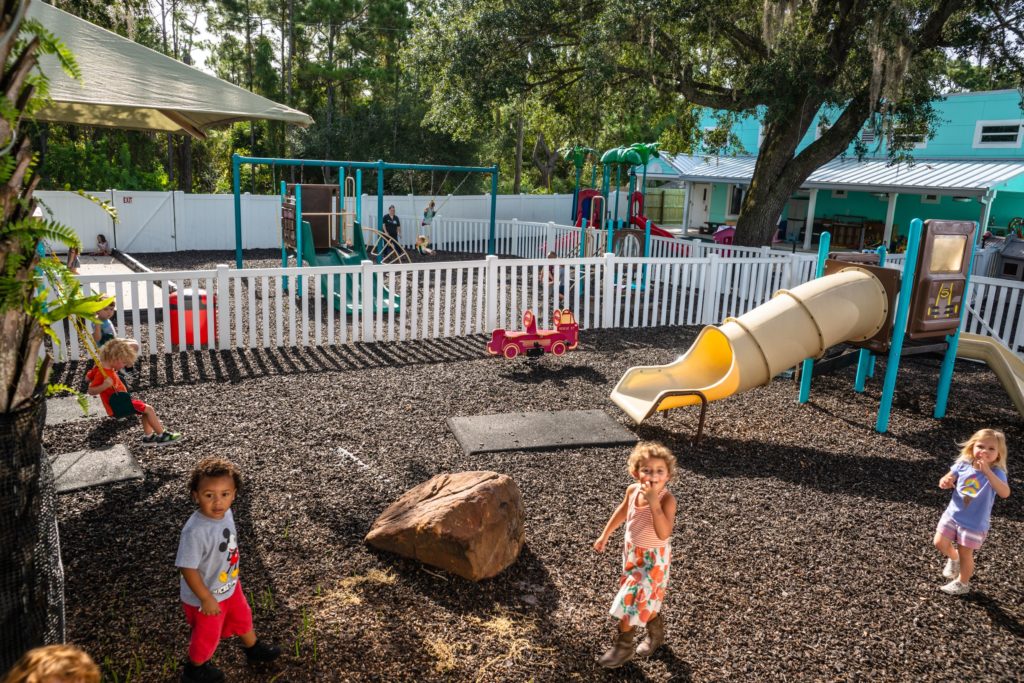
A Good Pre-K Program Should Still Feel Like Childhood
Kindergarten readiness matters. So does being 4 years old.
Young children learn exceptionally well when they can touch, build, move, pretend, experiment, talk, and ask questions. A quality program does not need to choose between learning and play because the two often happen at the same time.
Building a tower can become an early lesson in balance, counting, and problem-solving. Cooking activities introduce measurement and sequence. A story encourages vocabulary and comprehension. Art strengthens fine motor control. Outdoor games develop coordination and cooperation.
At Mustard Seed Kidz, the curriculum combines early academics with S.T.E.A.M. projects, exploration, and faith-based learning. The goal is development across the whole day rather than turning one portion of the morning into a miniature elementary classroom.
That balance is worth looking for when parents tour any preschool.
How Can Parents Prepare a Child for Pre-K?
Preparation does not need to look like weeks of flashcards before the first day.
Ordinary family routines build many of the same skills children will use in class.
Reading together gives children practice listening to language, following a story, asking questions, and connecting words with pictures. Letting a child put away toys or help set the table builds independence. Coloring, building, drawing, puzzles, and child-safe crafts strengthen hands that will eventually do more writing.
Conversation matters tremendously too.
Ask what your child noticed during a trip to the store. Let them explain how they built something. Talk through emotions when they are frustrated. Give them time to finish a thought rather than immediately supplying the words.
A child does not need to arrive at Pre-K knowing how to behave like a kindergartener. They need opportunities to become one.
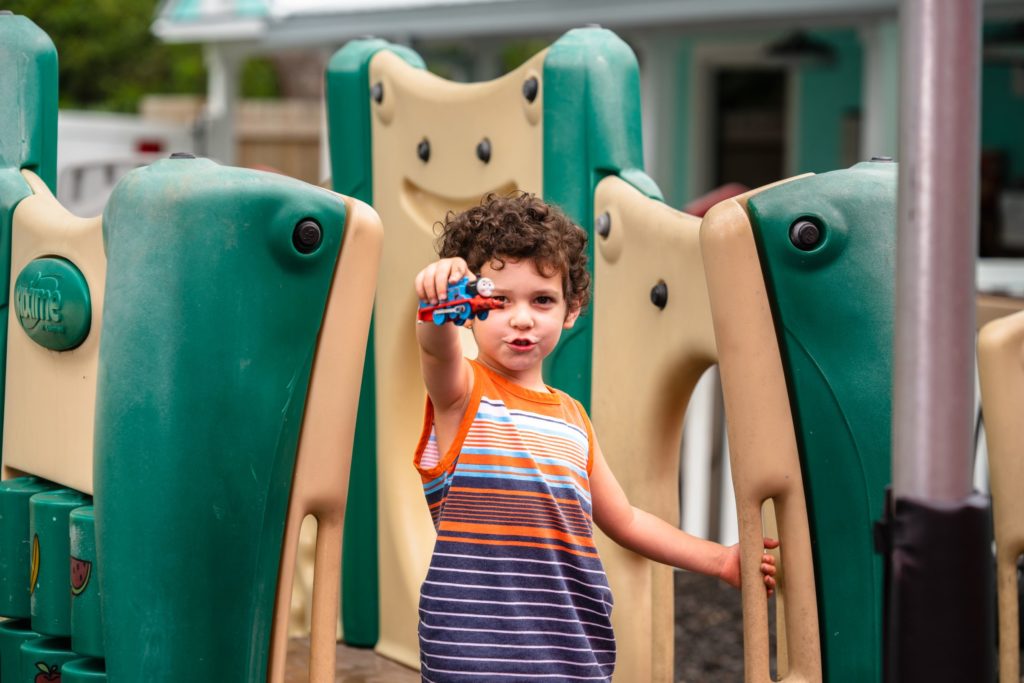
Should You Wait Another Year?
Most families will follow the normal age progression into Pre-K and then kindergarten. For some children, however, parents may wonder whether using Florida’s VPK postponement option makes sense.
There is no universal answer based solely on being shy, small for one’s age, energetic, or born close to the cutoff.
Development is broader than that.
If you are uncertain, the conversation can include your child’s preschool teacher, pediatrician, and prospective VPK provider. People who regularly observe your child in different settings may notice strengths or challenges that are difficult to see from a single perspective.
Parents should also separate genuine developmental considerations from the hope of creating an academic advantage by simply making a child older than classmates.
The goal is to place the child in an environment where they can learn successfully, not to win a race that has barely begun.
Choosing a Pre-K Program in West Melbourne
Once parents understand what age does pre k start, choosing a school becomes a more practical question.
Visit the classroom.
Look at how teachers speak to children when no one is performing for the tour. Notice whether the room feels controlled through constant correction or whether children seem to understand the routine. Ask what happens when a child struggles with separation, conflict, attention, or an activity that is difficult for them.
Find out what the day actually looks like.
Parents should understand how much time children spend learning in small groups, moving outdoors, creating, eating, resting, reading, exploring, and playing.
Ask about the transition into kindergarten as well. The strongest answer should involve more than memorizing letters and numbers.
Families considering Mustard Seed Kidz can review the current tuition and VPK options before visiting. Eligible VPK students currently attend the state-funded morning program from 8:30 a.m. to 11:30 a.m., while wraparound care is available for families who need coverage for the rest of the working day.
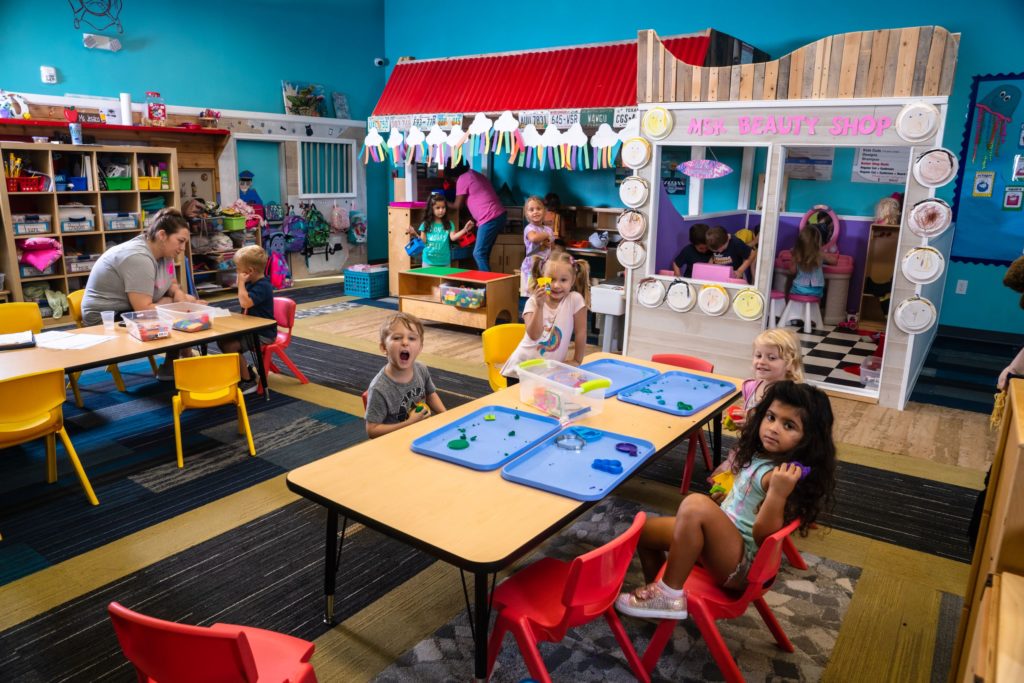
From Preschool to the Kindergarten Door
So, what age does pre k start? In most cases, Pre-K begins at age 4, while preschool may begin around age 3. In Florida, eligible children can participate in VPK when they are 4 years old on or before September 1 of the applicable school year, with a postponement option available for certain younger 4-year-olds.
The birthday determines eligibility. What happens during that year is much bigger.
Children are learning how to join a classroom community, trust teachers, develop friendships, communicate clearly, explore early reading and math, solve problems, and become more comfortable doing things on their own. Those experiences create the bridge between early childhood and kindergarten.
Mustard Seed Kidz has served families from West Melbourne, Palm Bay, Melbourne, and surrounding Brevard County communities since 2009, with programs spanning infancy through school age and a dedicated Florida VPK program for eligible 4- and 5-year-olds.
Parents who want to see what that transition looks like in person can contact Mustard Seed Kidz or schedule a campus tour. Walking through the classroom, meeting the teachers, and seeing children move through an ordinary school day can answer questions that an age cutoff alone never will.